
Why an element change needs more than a swap
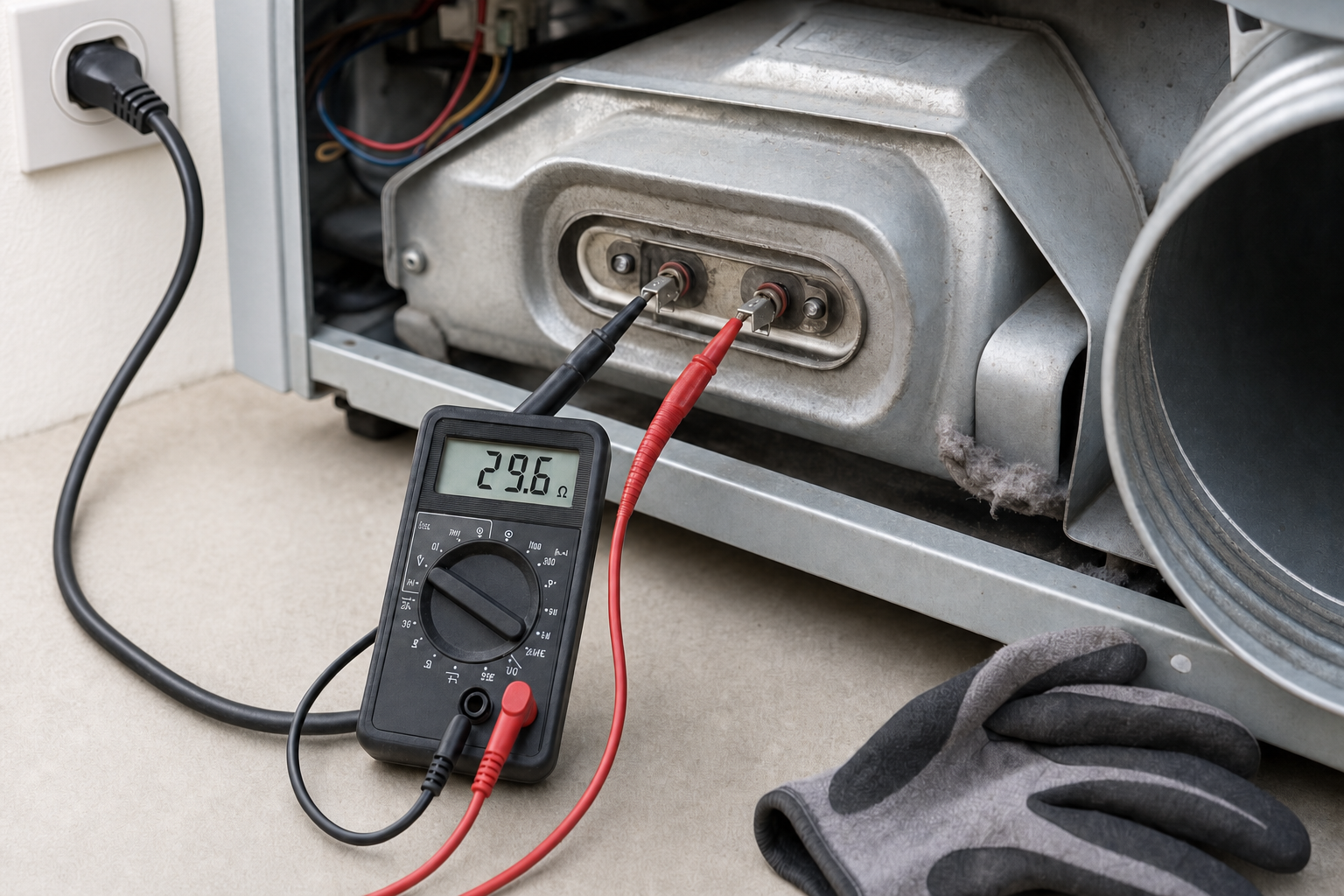
Element confirmed first
We test before replacing so similar faults are not mistaken for element failure.
Overheating causes checked
Restricted airflow can damage a heating element and must not be ignored.
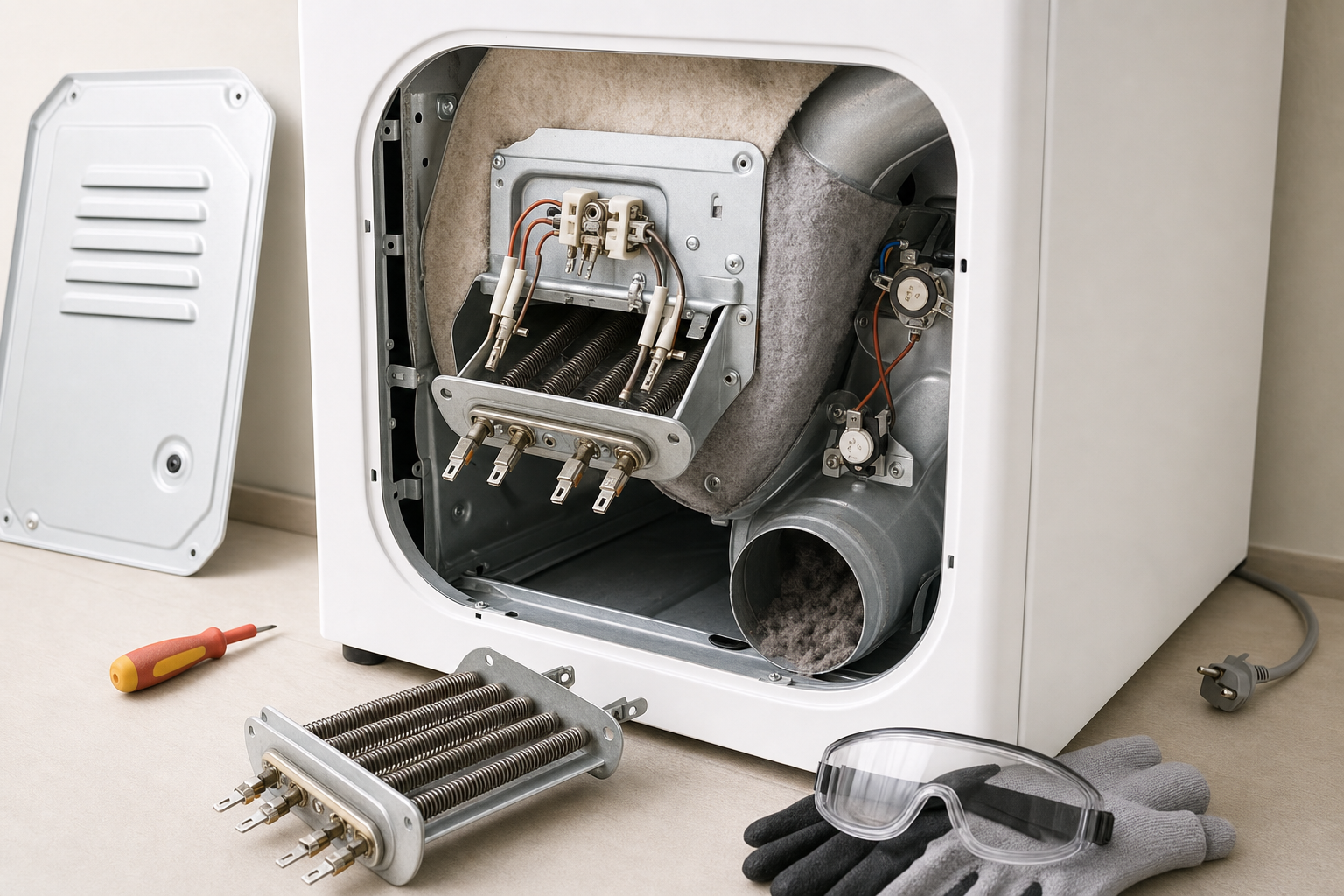
Heat tested after fitting
The dryer is checked for output, airflow and stable temperature control.
Making sure the element is really the fault
A heating element can fail completely, lose output, work only some of the time or trip the electrics during the heating stage, but those symptoms do not prove the element is always the culprit. Thermostats, wiring faults, airflow restriction and control problems can look similar from the outside. That is why the first job is to test and inspect rather than jump straight to replacement. With Tumble Dryer Repairs, we separate a genuinely failed element from faults elsewhere in the heating system and look for lint restriction or overheating conditions that may have contributed to the damage. The aim is to replace the element for the right reason, not simply because the dryer is cold and it feels like the obvious part.
Compatible fitting and proper heat checks
Once the element has been confirmed as the failed part, we fit a compatible replacement, secure the electrical connections, reassemble the heater housing and then test the dryer for heat output, airflow and temperature behaviour. That matters because a new element still needs the rest of the system around it to behave properly. Choosing Tumble Dryer Repairs means the visit does not stop at swapping the part and closing the panel. Around Stourbridge, we keep the work focused on restoring reliable heat while making sure blocked airflow, loose wiring or related faults are not left behind to shorten the life of the replacement.
Frequently asked questions
How do you tell if the heating element has failed?
We use electrical testing and inspection to separate a failed element from thermostat, airflow, wiring or control faults that can produce similar symptoms. That matters because a cold dryer does not automatically mean the element is at fault, even if it seems like the most obvious suspect.
Can lint blockage damage a tumble dryer heating element?
Yes. Restricted airflow can cause overheating, which puts extra strain on heating parts and can shorten the life of an element. That is why we look for lint restriction and wider airflow problems before fitting a replacement, rather than treating the failed part as if it exists in isolation.
What do you test after replacing a heating element?
We check that the dryer produces heat properly, that air is moving through the machine as it should and that the temperature is behaving sensibly through operation. The point is to confirm the heating system is working as a whole, not just that a new element has been bolted into place.